

Understanding the Importance of Portable Power
Planning a weekend trip to the campsite typically involves considering numerous aspects, ranging from the best way to prepare your tent to the amount of food you should bring along. But one of the most important matters is the possibility for charging your devices and appliances. A camping power station is an essential tool in virtually any wilderness survival expert’s kit because it provides electricity when you are hundreds of miles away from the nearest outlet. But what size do you need? Power stations come in various sizes and power levels. Let’s discuss your options below.
Assess Your Device Power Requirements
The first rule in figuring out the size of the power station you need is to start by making a list of all the equipment and devices you want to power on your weekend getaway. Obviously, there are smartphones, tablets, and computers on the list. Less obviously, there are also LED lamps, portable fans, camping coolers, and medical equipment if you have any. Every device has a certain wattage that it requires to function properly, which is usually indicated on the device itself or in the instruction manual. By adding up all the wattage of devices you want to use at the same time, you will get an idea of how big of a power station you will need to bring on your trip. A weekend trip generally involves only a few devices, and in that case, you should be fine with a power station that can provide between 300 and 600 Watts.
Understanding Battery Capacity and Watt-Hours
Battery capacity is typically measured in watt-hours (Wh) or amp-hours (Ah). This indicates how long your power station will keep your devices charged before it needs to be recharged. Many confuse wattage for watt-hours, but the former measures power while the latter indicates energy capacity. The former shows how much power your device needs at any given moment, while the latter tells you how much electricity the power station holds. A 500Wh-1000Wh power station is ideal for a weekend camping trip where you are in need of energy. It can provide you with 1-2 days of continuous usage. However, if you have power-intensive devices in mind such as portable air conditioning, air compressors, and other devices, then it might be a good idea to go with something between 1500Wh-2000Wh.
Exploring SOUOP Power Station Solutions
When comparing different options on the market, the SOUOP Power Station is a great choice for outdoor enthusiasts. This brand is known as Shenzhen Kerui Power Storage Co., Ltd. which focuses on portable energy storage products for the modern adventurer. They offer a wide range of portable power station solutions for home backup, renovation, construction, and outdoor RVs camping purposes. Their experience in the field of portable energy storage and solar generators makes them a great choice for anyone who is looking for a reliable outdoor power station.
SOUOP’s Diverse Product Range and Applications
SOUOP offers a comprehensive range of products, from the simplest of power stations, up to the more complex power stations. In addition, the company’s extensive product offering includes products for outdoor power, emergency backup, industrial, home backup, off-grid, RV and other professional applications. This wide variety of products allows them to serve a range of customers, from the weekend warrior to the ultra-prepared adventurer who wants to be prepared for anything. Their distributed energy storage products offer a flexible solution for any camping need, whether you plan on car camping near an established campground or going into the most remote wilderness. The solar generator can also be relied upon to provide the energy needed to power your home during an emergency.
Balancing Weight and Portability
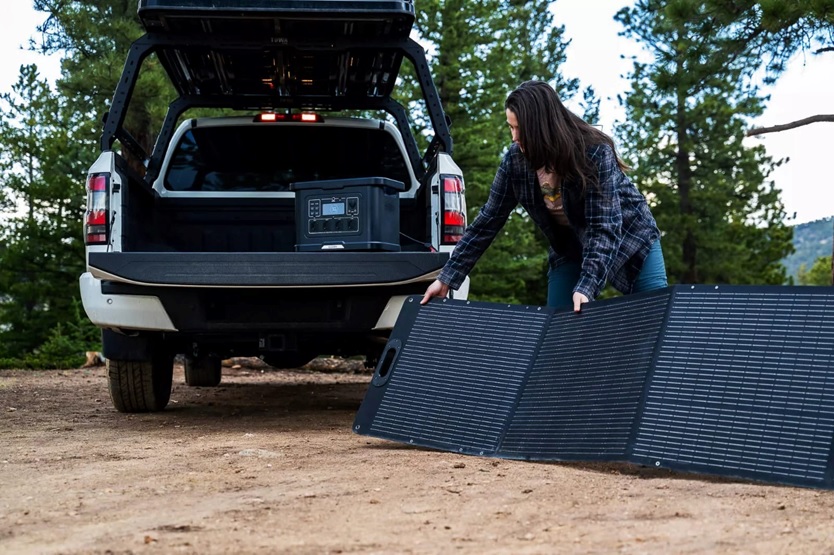
Weight and portability are two more things that should be taken into consideration. Sure, you may want to get that 3000Wh power station, but it won’t be worth it if you have trouble bringing it on your adventure. A good rule of thumb is to stay under 30 lbs if you plan on hiking to your camping spot. You don’t want something too big and bulky but still light enough to throw in your car. Something around 15-25 lbs with ample power should do nicely. Another thing to think about is how you will charge the battery. Some power stations offer solar panels that can charge your battery while out on your adventure. This is a great feature if you want to utilize renewable energy sources while keeping your power station topped off.
Evaluating Output Specifications and Connectivity Options
While the power capacity is essential, the input voltage and output specs are equally important factors. Most power stations have standard AC outlets (120 volts in North America), USB, USB-C, and/or DC outputs. If you are going to use your camping gear during the weekend, make sure to choose a station with the required ports. In addition, having different types of outputs allows you to use multiple devices at once, such as a laptop connected to an AC outlet and a smartphone that charges from USB. Some units also have smart power management to keep certain devices on long after the battery is depleted.
Considering Seasonal Variations
Power Station Tips to Consider Based on Season: If you go camping in winter, don’t forget to take the cold weather into account when choosing a power station. The battery discharge capacity is greatly affected by the temperature. You may need a larger capacity than you think for your winter camping trips. On the contrary, if you go camping in summer, you can consider a smaller power station with a solar panel. After all, it’s a great opportunity to recharge your power station.
Budget and Long-Term Value Considerations
Budget considerations are natural and a given, so you can rest assured knowing that quality power stations vary between several hundreds of dollars for minimalist models and up to several thousands for the true heavyweights. Nonetheless, there are also plenty of great options in the mid-range that offer excellent value for money without having to spend a fortune. Secondly, don’t always go for the cheapest option; compare the cost-per-watt-hour and warranty claims of the manufacturers.
Planning for Future Use Beyond Camping
Finally, what other benefits or uses are we talking about besides the occasional weekend camping? Will you want to use it for home backup in case of a power outage or something? It could also come in handy for your future RV adventures or renovation projects. Picking a power station that offers versatility can ensure you that you get the most out of your purchase. Not only will it keep you powered up on your camping retreats, but it can also evolve into your primary emergency backup system.
Making Your Final Decision
Choosing the right power station for your weekend camping trip comes down to your power needs, how portable you want it to be, and your budget. See below what you need to consider when purchasing a power station for camping.
How much you need your camping power station to support your devices.
Make sure to calculate the battery capacity of the power station you are considering.
The importance of the power station weight depends on how portable you want to be.
How much do you want to spend?
Will you rely on a small power station to keep your devices charged or would you rather have a more powerful and flexible power station to take everywhere with you? Having an energy source by your side while camping will definitely enhance your outdoor experience making it more enjoyable and connected, without limitations.