

Italy is a country where Christmas is celebrated through centuries-old traditions, beautiful craftsmanship, and a deep connection to cultural heritage. While many travelers associate the festive season with Christmas markets and illuminated city squares, one of Italy’s most fascinating holiday customs is the creation of elaborate Nativity scenes. Nowhere is this tradition more impressive than in Naples, a city where the art of depicting the birth of Jesus has become an essential part of local identity.
For travelers interested in authentic cultural experiences, exploring Italy’s Nativity traditions offers a unique perspective on Christmas. From historic artisan workshops to miniature villages filled with remarkable details, these displays reveal the creativity, faith, and storytelling that have shaped Italian celebrations for generations.
Why Nativity Scenes Are Central to Christmas in Italy
The Nativity scene, known in Italian as the presepe, is one of the country’s most beloved Christmas traditions. Its purpose is to represent the birth of Jesus Christ in Bethlehem, traditionally featuring Mary, Joseph, the infant Jesus, shepherds, angels, and the Three Wise Men.
The tradition is closely associated with St. Francis of Assisi, who organized a living representation of the Nativity in Greccio in 1223. His aim was to help people contemplate the circumstances of Jesus’ birth through a simple and accessible experience.
Over the centuries, Nativity displays evolved into elaborate artistic creations. Italian craftsmen began producing detailed figures, miniature buildings, and landscapes that reflected both biblical scenes and everyday village life.
Today, many Italian families continue to display Nativity scenes in their homes throughout December. Some collections contain only a handful of figures, while others grow into impressive miniature landscapes that are expanded each Christmas.
Naples: The Italian Capital of Nativity Craftsmanship
Naples is one of the most fascinating destinations for travelers interested in traditional Christmas culture. The city’s historic center is home to generations of artisans who specialize in producing handcrafted Nativity figures and miniature village accessories.
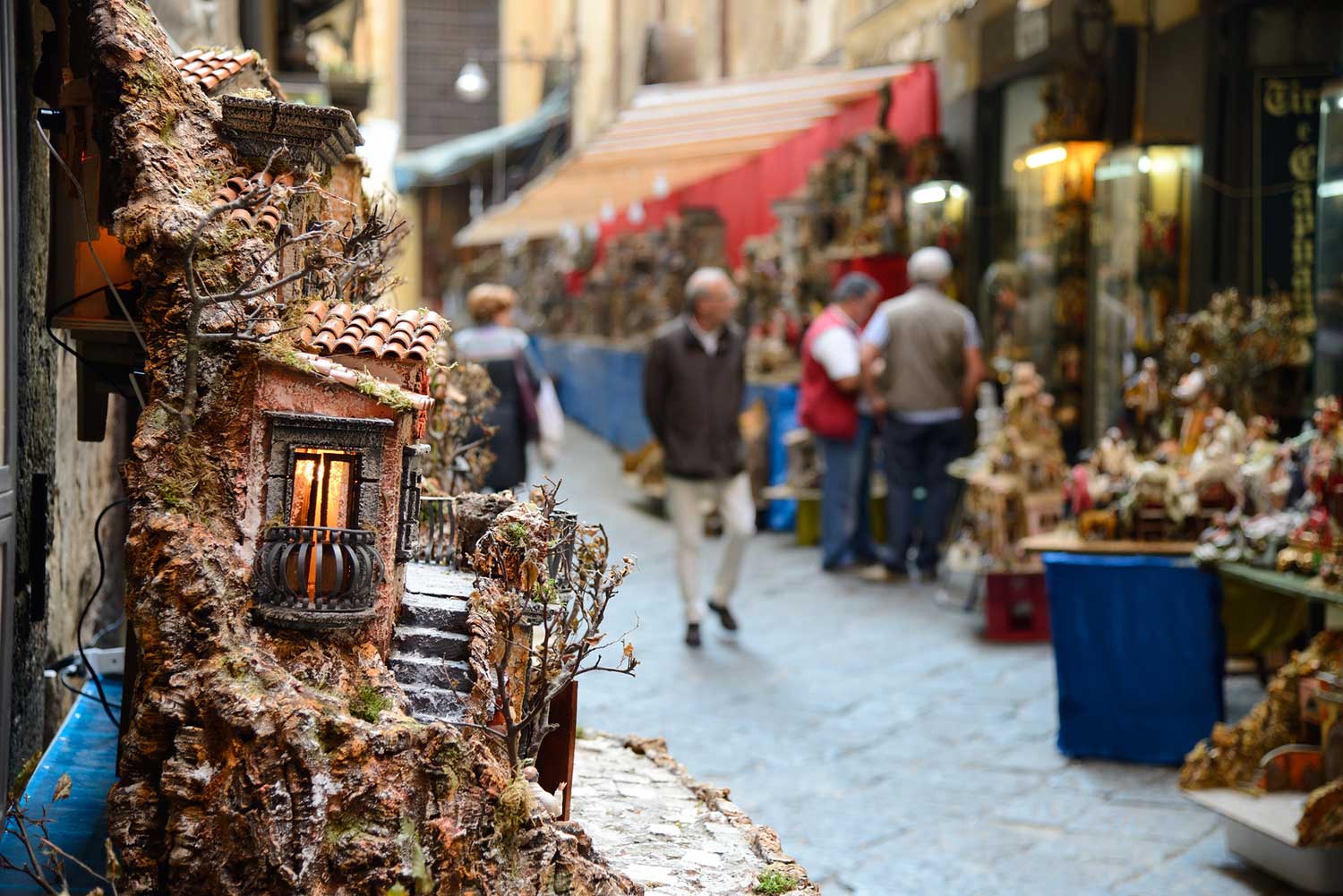
The most famous location is Via San Gregorio Armeno, a narrow street filled with workshops, boutiques, and displays dedicated to the presepe. During the Christmas season, visitors can admire intricate figures, miniature buildings, and carefully designed landscapes that recreate the atmosphere of traditional Italian villages.
What makes Neapolitan Nativity scenes especially distinctive is their attention to everyday life. Alongside Mary, Joseph, and the shepherds, visitors may discover bakers, musicians, merchants, farmers, and ordinary villagers.
These figures reflect the idea that the story of Christmas belongs not only to biblical history but also to the everyday lives of people. Each miniature scene becomes a celebration of community, craftsmanship, and cultural identity.
Exploring San Gregorio Armeno at Christmas
Walking along San Gregorio Armeno is like entering a living museum dedicated to Christmas traditions. Shop windows overflow with miniature shepherds, illuminated houses, terracotta figures, and tiny accessories designed for elaborate Nativity villages.
Many workshops continue to use traditional craftsmanship techniques, producing figures with carefully painted faces, detailed clothing, and expressive poses. Visitors can observe the extraordinary variety of styles, from simple rustic figures to elaborate artistic creations.
The street also reflects Naples’ playful personality. Some artisans create figurines inspired by contemporary celebrities, athletes, and public figures, adding humor and modern references to a centuries-old tradition.
For travelers who appreciate authentic souvenirs, a handcrafted Nativity figure can become a meaningful reminder of their Italian Christmas adventure. Those who wish to continue exploring Italian religious craftsmanship after returning home can discover traditional Nativity figures, miniature village accessories, and Christmas decorations on Holyart, which offers a broad selection of items inspired by Italy’s Christian artistic heritage at affordable prices.
Visiting during a weekday morning can provide a more comfortable experience than arriving during the busiest December weekends. Allow time to explore nearby churches, admire the historic architecture, and discover the smaller artisan shops tucked into the surrounding streets.
The Fascinating Art of Neapolitan Christmas Villages
Traditional Neapolitan Nativity scenes are much more elaborate than a simple arrangement of religious figures. Many include entire miniature villages featuring stone houses, winding staircases, market stalls, bridges, fountains, and illuminated interiors.
The craftsmanship involved is remarkable. Artisans use materials such as wood, cork, terracotta, fabric, and paint to create realistic architectural details and landscapes.
Miniature markets may feature baskets of vegetables, tiny loaves of bread, and handcrafted household objects. Small taverns, bakeries, and workshops recreate scenes of ordinary life, giving the village a sense of movement and personality.
This attention to detail makes Neapolitan Nativity art particularly interesting for travelers who appreciate architecture, history, and traditional crafts. Each display offers a miniature representation of the culture and imagination of its creators.
Collecting Nativity figures is also an important family tradition. Many Italian households add a new character or accessory each year, gradually transforming a simple display into a treasured collection.
Beyond Naples: Other Italian Christmas Traditions Worth Discovering
Although Naples is particularly famous for its Nativity craftsmanship, travelers can discover meaningful Christmas traditions throughout Italy.
Assisi, in the region of Umbria, is closely associated with St. Francis and offers a spiritual atmosphere during Advent. Its historic churches, medieval streets, and connection to the origins of the living Nativity make it an appealing destination for visitors interested in Christian heritage.
Greccio, a small town in Lazio, is another meaningful stop. Its connection to the first living Nativity organized by St. Francis gives the destination a special place in Christmas history.
Rome offers a different experience, combining magnificent churches, religious celebrations, and festive public spaces. Visitors can admire Nativity displays and explore the city’s extraordinary artistic heritage during the holiday season.
In northern Italy, towns throughout the Alpine regions celebrate Christmas through markets, wooden decorations, traditional foods, and winter festivities. These destinations offer a contrast to the lively atmosphere of Naples while preserving their own regional customs.
Discover Traditional Italian Christmas Food
No cultural journey through Italy would be complete without exploring its food traditions. Christmas meals vary significantly by region, reflecting local ingredients, family customs, and culinary history.
In Naples, festive celebrations are associated with seafood dishes, traditional pastries, and family gatherings. One particularly recognizable dessert is struffoli, small fried dough balls coated in honey and decorated with colorful sprinkles.
Throughout Italy, panettone and pandoro are among the most familiar Christmas sweets. These festive cakes are frequently shared with relatives, brought to gatherings, or purchased as holiday gifts.
Christmas Eve and Christmas Day meals also provide opportunities to experience the importance of family in Italian culture. Many households prepare recipes that have been passed down through generations.
Travelers can explore these traditions by visiting bakeries, local food markets, and restaurants offering regional holiday specialties. Sampling traditional dishes adds another cultural dimension to the Christmas experience.
Practical Tips for Visiting Italy During Christmas
Planning a Christmas trip to Italy requires some consideration, particularly if you hope to visit popular artisan districts or attend religious celebrations.
December is a busy period in many historic city centers. Booking accommodation in advance is advisable, especially in destinations known for Christmas markets and seasonal attractions.
Comfortable walking shoes are essential when exploring Naples, Rome, or other historic towns with narrow streets and uneven pavement. Travelers should also prepare for winter weather, which varies considerably between northern and southern Italy.
Be aware that some museums, shops, and attractions operate reduced hours on Christmas Eve, Christmas Day, and other public holidays. Checking opening schedules before traveling can prevent disappointment.
Finally, leave room in your itinerary for spontaneous discoveries. Wandering through smaller streets, entering a historic church, or speaking with local artisans may become the most memorable part of your Christmas journey.
Conclusion: Experience the Cultural Magic of Christmas in Italy
Christmas in Italy offers much more than festive decorations and seasonal shopping. It provides an opportunity to discover centuries-old traditions, admire extraordinary craftsmanship, and experience the cultural importance of religious celebrations.
Naples is particularly memorable because its Nativity workshops preserve an art form that connects faith, storytelling, and everyday life. From the miniature villages of San Gregorio Armeno to the spiritual heritage of Assisi and Greccio, Italy offers countless ways to explore the history and beauty of Christmas.
For travelers seeking authentic experiences, discovering Italian Nativity traditions can transform an ordinary winter vacation into a journey through art, culture, and living history.